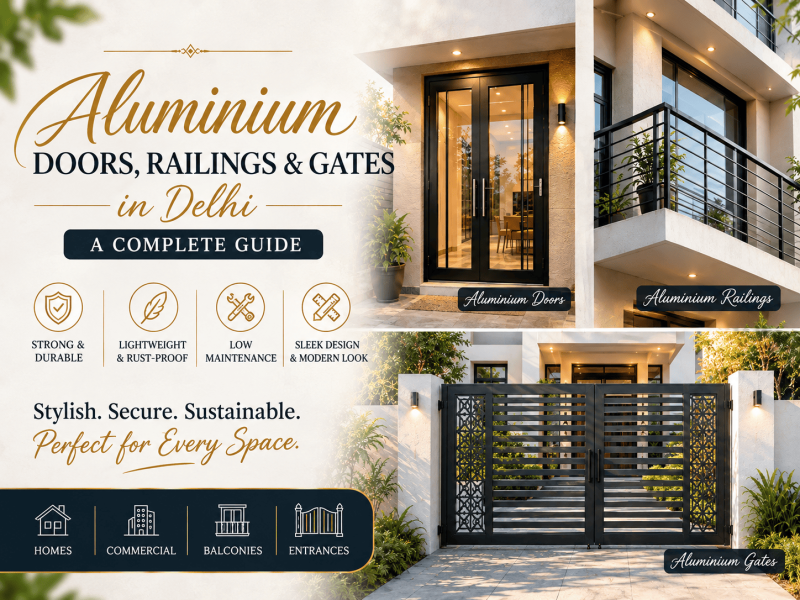
Aluminium has become a popular material for doors, railings and gates across residential, commercial and architectural projects. Its lightweight construction, corrosion resistance, versatility and modern appearance make it suitable for both indoor and outdoor applications.
From balcony and staircase railings to entrance gates and aluminium doors, the right profile and system can have a significant impact on the appearance, functionality and durability of a project.
For this reason, choosing an experienced aluminium railing supplier in Delhi is important. A reliable supplier can help you identify suitable profiles, sections, hardware and accessories based on your project requirements.
This guide covers the major types of aluminium doors, railings and gates, their applications and the factors to consider before selecting them.
Why Is Aluminium Used for Doors, Railings and Gates?
Aluminium offers several characteristics that make it suitable for architectural applications.
1. Lightweight Construction
Aluminium is lighter than many traditional metals, making it easier to handle and fabricate. This can be particularly useful for doors, railing systems and gates.
2. Corrosion Resistance
Aluminium naturally develops a protective oxide layer that helps it resist corrosion. This makes it suitable for many indoor and outdoor environments.
3. Modern Appearance
Aluminium profiles can provide clean lines and contemporary designs, making them popular in modern residential and commercial architecture.
4. Design Flexibility
Profiles can be manufactured in different shapes and dimensions, allowing aluminium to be used across a variety of door, railing and gate designs.
5. Relatively Low Maintenance
When appropriately finished and installed, aluminium products can require comparatively little routine maintenance.
Aluminium Doors in Delhi
Aluminium doors are used in homes, offices, shops, commercial buildings, institutions and other spaces.
They can be designed in different configurations depending on the application, including framed doors, glass doors, sliding doors and other architectural systems.
Aluminium doors can be used for:
- Main entrances
- Office entrances
- Balcony access
- Commercial storefronts
- Internal spaces
- Residential applications
- Institutional buildings
The appropriate door profile depends on factors such as the size of the opening, glass or panel requirements, hardware and desired design.
Aluminium Door Sections
The profile or section is an important component of an aluminium door. It forms the framework that supports the glass, panel or other door elements.
When selecting aluminium door sections, consider:
- Profile dimensions
- Wall thickness
- Door size
- Glass compatibility
- Hardware compatibility
- Surface finish
- Opening configuration
- Installation requirements
A suitable section should be selected according to the complete door system rather than simply choosing a profile based on appearance.
Aluminium Jindal Aluminum Door
Brand-specific aluminium products are also considered by customers looking for established product specifications.
The Aluminium Jindal Aluminum Door category can be relevant for projects where Jindal aluminium products are preferred or specified.
However, buyers should confirm the exact product specification before ordering. Door requirements can vary according to dimensions, profile design, glass configuration, finish and hardware.
When purchasing branded aluminium products, it is useful to verify:
- Product specifications
- Profile dimensions
- Finish
- Availability
- Required quantity
- Compatibility with the intended door system
This helps ensure that the selected product is appropriate for the project.
Aluminium Railings in Delhi
Aluminium railings are widely used in residential, commercial and architectural projects.
An experienced aluminium railing supplier in Delhi can provide railing profiles and components for different applications, depending on the required design and system.
Aluminium railings can be installed in:
- Balconies
- Staircases
- Terraces
- Walkways
- Porches
- Commercial buildings
- Residential properties
- Public and institutional spaces
The railing design can vary from simple horizontal or vertical systems to more contemporary glass-based designs.
Aluminium Glass Railing in Delhi
Aluminium glass railing combines aluminium profiles or supports with glass to create an open and contemporary appearance.
Aluminium glass railing in Delhi is commonly considered for balconies, staircases, terraces, commercial spaces and modern residential projects.
One of the key advantages of a glass railing system is that it can provide a less visually obstructed appearance compared with solid railing designs.
Before selecting an aluminium glass railing system, consider:
- Glass type and thickness
- Profile design
- Fixing method
- Railing height
- Installation conditions
- Hardware
- Safety requirements
- Indoor or outdoor application
The glass and aluminium components should be selected as a compatible system, particularly for applications where the railing is subject to significant loads or exposure.
Aluminium Staircase Railings
Staircase railings need to provide both functionality and appropriate support while complementing the interior or exterior design.
Aluminium railing profiles can be combined with glass, vertical elements or other infill materials depending on the desired appearance.
For staircase applications, important considerations include:
- Staircase dimensions
- Railing height
- Profile strength
- Fixing method
- Handrail design
- Infill material
- Surface finish
Proper installation is essential to ensure the railing performs as intended.
Aluminium Balcony Railings
Balcony railings are an important safety and architectural element of residential and commercial buildings.
Aluminium can be used to create balcony railing systems with different designs and finishes.
For a modern appearance, aluminium and glass can be combined to create a visually open balcony. Alternatively, aluminium profiles can be used with other infill materials depending on the project.
For balcony applications, the railing should always be designed and installed according to applicable building and safety requirements.
Aluminium Gates in Delhi
Aluminium gates are used for residential entrances, commercial properties, institutions and other buildings.
They can be fabricated in a variety of designs, from simple framed gates to larger contemporary structures.
Aluminium is often considered for gates because it combines relatively low weight with corrosion resistance and design flexibility.
Gate design can include:
- Sliding gates
- Swing gates
- Pedestrian gates
- Compound gates
- Entrance gates
- Decorative gates
The appropriate profile depends on the size, design, operating mechanism and structural requirements of the gate.
Aluminium Gate Profiles
The profile used in an aluminium gate forms an important part of its framework.
When choosing an aluminium gate profile in Delhi, consider the overall gate dimensions, design, required strength, infill material and operating mechanism.
For example, a large sliding gate may have different profile requirements compared with a smaller pedestrian gate.
Important factors include:
- Profile dimensions
- Wall thickness
- Gate size
- Weight
- Hardware compatibility
- Finish
- Installation method
- Operating mechanism
A supplier can help identify profiles suitable for fabrication based on the gate design and specifications.
Aluminium Sliding Gates
Sliding gates can be useful where there is limited space for a conventional swing gate.
Aluminium profiles can be fabricated into sliding gate structures for residential and commercial applications.
The overall system may include aluminium profiles along with rollers, tracks, locks, handles and other hardware.
For larger gates, the profile selection should take into account the overall dimensions and operating loads.
Aluminium Swing Gates
Swing gates open inward or outward and can be designed as single or double-leaf systems.
Aluminium profiles can be used to create lightweight gate frameworks that accommodate different design styles.
The appropriate hinges, locks and other hardware should be selected according to the gate's size and weight.
How to Choose the Right Aluminium Railing, Door or Gate
Choosing the right product requires more than selecting a design. The profile and components should be suitable for the intended application.
1. Determine the Application
Start by identifying where the product will be installed.
A balcony railing, staircase railing, entrance gate and office door will have different requirements.
2. Take Accurate Measurements
Accurate dimensions are essential when ordering aluminium profiles and systems.
Provide details such as:
- Width
- Height
- Opening dimensions
- Profile requirements
- Quantity
- Glass dimensions where applicable
Accurate measurements help reduce fabrication and installation issues.
3. Select the Appropriate Profile
The profile should be suitable for the size, design and functional requirements of the application.
For larger doors, gates or railings, profile selection may require additional technical consideration.
4. Consider the Finish
The surface finish affects the appearance and may also influence how the aluminium performs in its installation environment.
Depending on availability and project requirements, finishes may include anodised or powder-coated surfaces and other options.
5. Check Hardware Compatibility
Doors, gates and railings often require several supporting components.
These may include:
- Hinges
- Handles
- Locks
- Rollers
- Brackets
- Fasteners
- Connectors
The hardware should be compatible with the selected aluminium profile and system.
Aluminium vs Other Railing Materials
Different railing materials can be suitable for different applications.
Aluminium is often selected because it provides a combination of lightweight construction, corrosion resistance and design flexibility.
Glass can be combined with aluminium when a more open architectural appearance is desired.
Steel may be preferred for certain heavy-duty applications, while other materials may be selected based on budget, design and environmental requirements.
Therefore, the best material depends on the project's specific requirements rather than a single material being suitable for every application.
What to Ask an Aluminium Railing Supplier in Delhi
Before purchasing an aluminium railing or related product, provide the supplier with complete project information.
Ask about:
- Available profiles
- Profile dimensions
- Material specifications
- Finishes
- Glass compatibility
- Hardware options
- Stock availability
- Quantity requirements
- Delivery timelines
- Fabrication or installation support, if required
An experienced aluminium railing supplier in Delhi should be able to understand the application and guide you towards suitable products.
Why Choose an Experienced Aluminium Supplier?
The quality of the final installation depends on more than the aluminium profile itself.
A supplier with experience in architectural and aluminium products can help coordinate different components and understand the requirements of fabricators, contractors, architects and builders.
This can be particularly useful when a project requires multiple products such as:
- Door sections
- Railing profiles
- Gate profiles
- Aluminium hardware
- Glass-compatible sections
- Architectural aluminium products
Having access to a broader product range can also simplify procurement.
Aluminium Doors, Railings and Gates from Kohli Aluminium
Kohli Aluminium has been involved in aluminium trading and the sourcing, supply and distribution of aluminium products since 1994.
The company serves customers across construction, transportation, electrical, aeronautical, food and beverage and other industries.
Its approach focuses on understanding customer requirements and providing suitable aluminium products and solutions for different applications.
Quality assurance and product checking are part of the supply process before dispatch, helping ensure that products meet the required specifications.
For aluminium doors, railing profiles, glass railing requirements, gate profiles and other aluminium products, customers can discuss their project specifications and requirements with the team.
Frequently Asked Questions
Q1. What are aluminium railings used for?
Ans. Aluminium railings can be used for balconies, staircases, terraces, walkways, porches, commercial buildings and residential properties.
Q2. Are aluminium glass railings suitable for balconies?
Ans. Aluminium glass railings can be used for balconies when the appropriate glass, aluminium profiles, fixing systems and installation methods are selected according to the project's safety requirements.
Q3. How do I choose an aluminium railing supplier in Delhi?
Ans. Consider the supplier's product range, material specifications, profile availability, finish options, hardware compatibility, experience and ability to fulfil your project requirements.
Q4. What is an aluminium gate profile?
Ans. An aluminium gate profile is an aluminium section used to fabricate the framework or components of an aluminium gate. The appropriate profile depends on the gate's dimensions, design, operating mechanism and structural requirements.
Q5. Are aluminium gates suitable for outdoor use?
Ans. Aluminium can be suitable for outdoor gate applications because of its corrosion resistance and relatively low maintenance requirements. The appropriate profile, finish and installation method should be selected for the environment.
Q6. What is an Aluminium Jindal Aluminum Door?
Ans. It refers to aluminium door products or systems associated with Jindal aluminium products. Buyers should verify the exact profile, dimensions, finish and system specifications before purchasing.
Q7. Can aluminium be combined with glass?
Ans. Yes. Aluminium profiles are commonly combined with glass in doors, railings, partitions, facades and other architectural applications.
Q8. What factors affect the cost of an aluminium railing?
Ans. The cost can depend on the profile type, dimensions, finish, glass or infill material, hardware, quantity, fabrication and installation requirements.
Conclusion
Aluminium doors, railings and gates offer a versatile solution for residential, commercial and architectural projects. Their lightweight construction, corrosion resistance, design flexibility and range of available profiles make aluminium suitable for many applications.
Whether you need an aluminium door, staircase railing, balcony railing, glass railing or gate profile, selecting the right section and compatible components is essential.
If you are looking for an aluminium railing supplier in Delhi, provide your project dimensions, application, preferred design and material requirements so the supplier can recommend appropriate products.
From aluminium railing profiles and glass-compatible systems to door sections and gate profiles, choosing products based on actual project requirements can help achieve a functional, durable and visually consistent result.