Aluminium is used in a wide range of applications, from door and window fabrication to industrial manufacturing and customised structures. But not every project requires the same type of aluminium product. Some applications need a precisely shaped section, while others require flat bars or solid rods for fabrication and machining.
Understanding the differences between these products can help you select suitable materials, avoid unnecessary expenses and make more informed purchasing decisions.
If you are looking for an aluminium section supplier in Delhi, it is worth understanding the available product types, their common applications and the specifications you should check before placing an order.
At Kohli Aluminium, customers can explore aluminium product solutions for a variety of industries and applications. Here is a practical guide to some commonly used aluminium materials.
What Are Aluminium Sections?
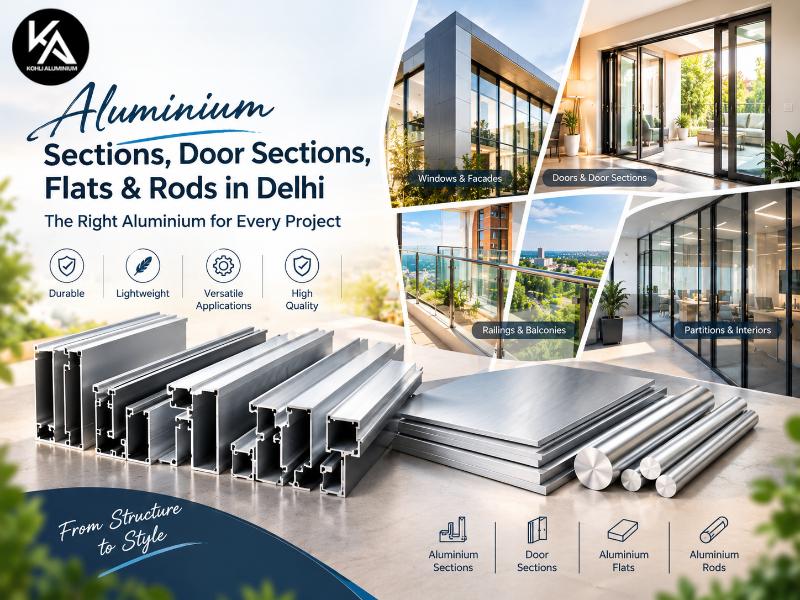
Aluminium sections are products manufactured in specific shapes to meet different design and functional requirements. They may be produced through extrusion, which allows aluminium to be formed into cross-sections such as channels, angles, square sections, rectangular sections and specialised profiles.
These shapes are used in construction, interior design, fabrication and industrial applications.
The advantage of using a suitable aluminium section is that its shape can be designed around the requirements of a particular assembly. However, the right choice depends on the dimensions, alloy, wall thickness, finish and intended use.
When comparing products from an aluminium section supplier in Delhi, always confirm the specifications rather than relying on appearance alone.
Aluminium Section Supplier in Delhi: What Should You Look For?
Choosing an aluminium supplier involves more than comparing prices. You need to make sure that the available products match your project's requirements.
Here are a few things to consider.
Product Availability
Start by identifying the section you need. Different projects may require channels, angles, rectangular sections, door profiles or other specialised extrusions.
Before placing an order, confirm whether the required profile is available in the dimensions and quantity you need.
Dimensions and Specifications
Measurements can make a significant difference to the suitability of an aluminium section. Check the cross-sectional shape, length, thickness and other relevant specifications.
For applications involving loads or structural performance, ensure that the selected section meets the required engineering specifications.
Finish and Appearance
Depending on the application, aluminium sections may be required in a mill finish, anodised finish or powder-coated finish.
For visible architectural and interior applications, the finish may be particularly important. Confirm the available options before finalising your selection.
Order Quantity and Delivery
Discuss your required quantity, stock availability and delivery timeline with the supplier. If you are purchasing materials for an ongoing manufacturing or construction project, consistent specifications and reliable sourcing arrangements can be especially important.
You can visit Kohli Aluminium to learn more about the company and its aluminium product offerings.
Aluminium Door Section (Jindal) in Delhi
Aluminium door sections are commonly used in the fabrication of door frames and related components for homes, offices, showrooms and commercial buildings.
The section selected for a door system must match its design, dimensions, hardware and installation requirements. Different door configurations may require different profile shapes and specifications.
If you are searching for an Aluminium Door Section (Jindal) in Delhi, consider the following before purchasing:
- Profile design: Identify the specific door system and section required.
- Dimensions: Confirm the measurements and compatibility with the intended assembly.
- Hardware compatibility: Check that the section works with the required handles, locks, rollers and other fittings.
- Finish: Choose a finish that suits the appearance and usage requirements of the project.
- Brand and availability: If you require a specific Jindal product, confirm its identification, documentation and availability with the supplier.
Sharing a product reference, catalogue number or technical drawing can help reduce confusion when sourcing a particular door section.
For other aluminium fabrication requirements, you can also explore the aluminium gate profile page.
Aluminium Flats: Common Uses and Selection Tips
Aluminium flats are flat-shaped products used across fabrication, engineering, manufacturing and maintenance applications.
Depending on their specifications, they may be used for brackets, support components, fabricated assemblies and other applications where a flat aluminium section is suitable.
When sourcing aluminium flats, pay attention to the following factors.
Width and thickness: Choose dimensions that meet the requirements of the intended component.
Material grade: The alloy and temper should be suitable for the application's mechanical and environmental requirements.
Length and quantity: Confirm the required lengths and total quantity to help plan cutting, fabrication and material usage.
Surface finish: Check whether the material's surface condition is appropriate for the intended application.
Before ordering, provide your supplier with the dimensions and any relevant technical specifications. This makes it easier to compare suitable products and quotations.
Aluminium Rods: Applications in Fabrication and Manufacturing
Aluminium rods are solid cylindrical products commonly used in machining, engineering, manufacturing and fabrication.
They can be used to produce components, turned parts and other items that require cylindrical aluminium stock. Their suitability depends on the material grade, diameter, length and machining requirements.
If you are sourcing aluminium rods for a production process, consider these points:
- Diameter: Make sure the rod matches the required component dimensions.
- Alloy and temper: Check the material requirements for the intended machining or manufacturing operation.
- Length: Determine whether standard stock lengths meet your needs.
- Machining requirements: Consider the cutting, drilling, turning or other operations involved.
- Quantity: Estimate the total material requirement, including any allowance for machining waste.
Clear specifications can help you identify the right stock material for your project.
Aluminium Profiles vs Flats vs Rods: What Is the Difference?
Although these products are all made from aluminium, they serve different purposes.
| Product | Shape | Common applications |
| Aluminium profiles and sections | Channels, angles and other cross-sectional shapes | Doors, windows, partitions, fabrication and assemblies |
| Aluminium door sections | Specialised profiles designed for door systems | Door frames and related components |
| Aluminium flats | Flat, rectangular cross-section | Brackets, supports and fabricated components |
| Aluminium rods | Solid cylindrical cross-section | Machining, engineering and manufactured parts |
The best choice depends on the design and function of the finished product. A door section is designed around a particular door system, whereas a flat or rod is generally selected according to the dimensions and requirements of the component being manufactured.
Applications Across Different Industries
Aluminium sections and stock materials are used across several industries.
Construction and Building Projects
Profiles and sections may be used in door and window systems, partitions, furniture and selected architectural applications. Product selection should account for design, dimensions, finish and technical performance.
Interior Design and Commercial Spaces
Aluminium sections are used in office interiors, display units, furniture systems and customised fixtures. The right profile can help meet specific layout and assembly requirements.
Industrial Fabrication
Flats, rods and other aluminium stock products are used in machining, equipment manufacturing, component production and fabrication. The required grade and dimensions depend on the finished component.
Manufacturing and Engineering
Manufacturers may source aluminium materials in different shapes for cutting, machining, forming and assembly. Consistent material specifications can be particularly important for repeat production.
Why Source Aluminium Products from Kohli Aluminium?
Kohli Aluminium has been involved in aluminium sourcing, supply and distribution since 1994. The company serves customers across sectors such as construction, transport, electrical applications, food and beverage, and other industries.
When sourcing aluminium products, it helps to communicate your requirements clearly. Details such as the product type, dimensions, quantity, material specifications and finish can make the enquiry process more efficient.
Whether you need aluminium sections for fabrication or are comparing stock materials for a manufacturing application, start by identifying the specifications that your project requires.
Visit Kohli Aluminium to learn more about the company. For product enquiries and availability, use the Contact Us page.
Frequently Asked Questions
1. How do I choose an aluminium section supplier in Delhi?
Compare suppliers based on product availability, specifications, finish options, quotation clarity, order quantities and delivery arrangements. Explain your intended application and provide dimensions or drawings where possible.
2. What are aluminium sections used for?
Aluminium sections are used in doors, windows, partitions, furniture, fabrication and industrial assemblies. Their applications depend on their shape, dimensions, material properties and intended use.
3. How can I source an Aluminium Door Section (Jindal) in Delhi?
Identify the required profile and confirm its dimensions, finish, brand identification and availability with your supplier. A catalogue reference or technical drawing can help you find the correct product.
4. What are aluminium flats used for?
Aluminium flats are commonly used in fabrication, engineering, manufacturing and support components. The appropriate width, thickness and alloy depend on the application.
5. What is the difference between aluminium rods and aluminium flats?
Aluminium rods have a solid cylindrical shape, whereas aluminium flats have a flat, rectangular cross-section. Rods are often used for machining and cylindrical components, while flats are commonly used for brackets, supports and fabricated parts.
6. How do I select the correct aluminium rod size?
Consider the required diameter, length, alloy, temper and machining requirements. Confirm the material specifications before ordering, particularly for precision components.
7. Are all aluminium sections suitable for structural applications?
No. The suitability of a section depends on its alloy, dimensions, design, loading conditions and relevant engineering requirements. Consult a qualified professional when structural performance or safety is involved.
8. What information should I provide when requesting an aluminium quotation?
Share the product type, dimensions, quantity, required material specifications, finish and delivery location. If you need a particular profile, include a catalogue reference or technical drawing when available.
Conclusion
Aluminium sections, door profiles, flats and rods each serve different purposes in construction, fabrication and manufacturing. Understanding their shapes, specifications and applications can help you choose products that meet your project requirements.
If you are comparing options from an aluminium section supplier in Delhi or sourcing a specific Jindal door section, aluminium flat or rod, confirm the required specifications before placing your order.
Visit Kohli Aluminium to explore the company's aluminium offerings, or contact the team to discuss your product requirements.